Designing a global B2B textile recycling marketplace
Client
Eslando
Role
UX and UI Design (Sole designer)
Eslando is a start up working at pace to develop and grow an ambitious platform to connect huge volumes of textile waste from manufacturers to where it can be recycled. They had a proof of concept where stock could be uploaded and browsed, but a full new marketplace design was needed to be ready to onboard customers successfully and grow.
Key features to deliver included robust navigation, browsing and advanced filtering UI tailored to market needs.
Accessible end to end marketplace experiences for both buyers and sellers were delivered in close collaboration with Eslando’s founders, in a 3 week timeline
Delivered:
New information architecture and navigation for buyers and sellers, including stock categorisation and listings
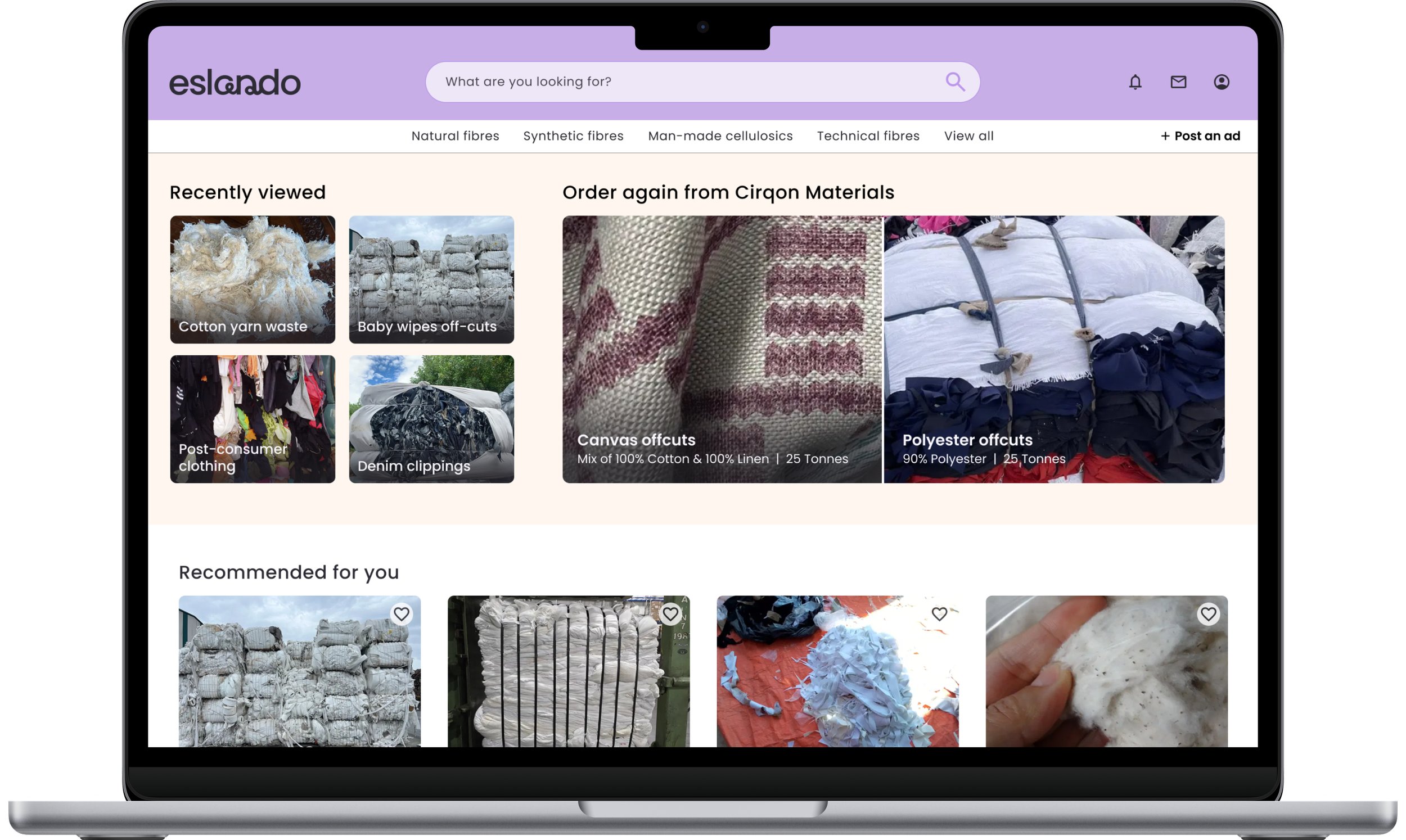
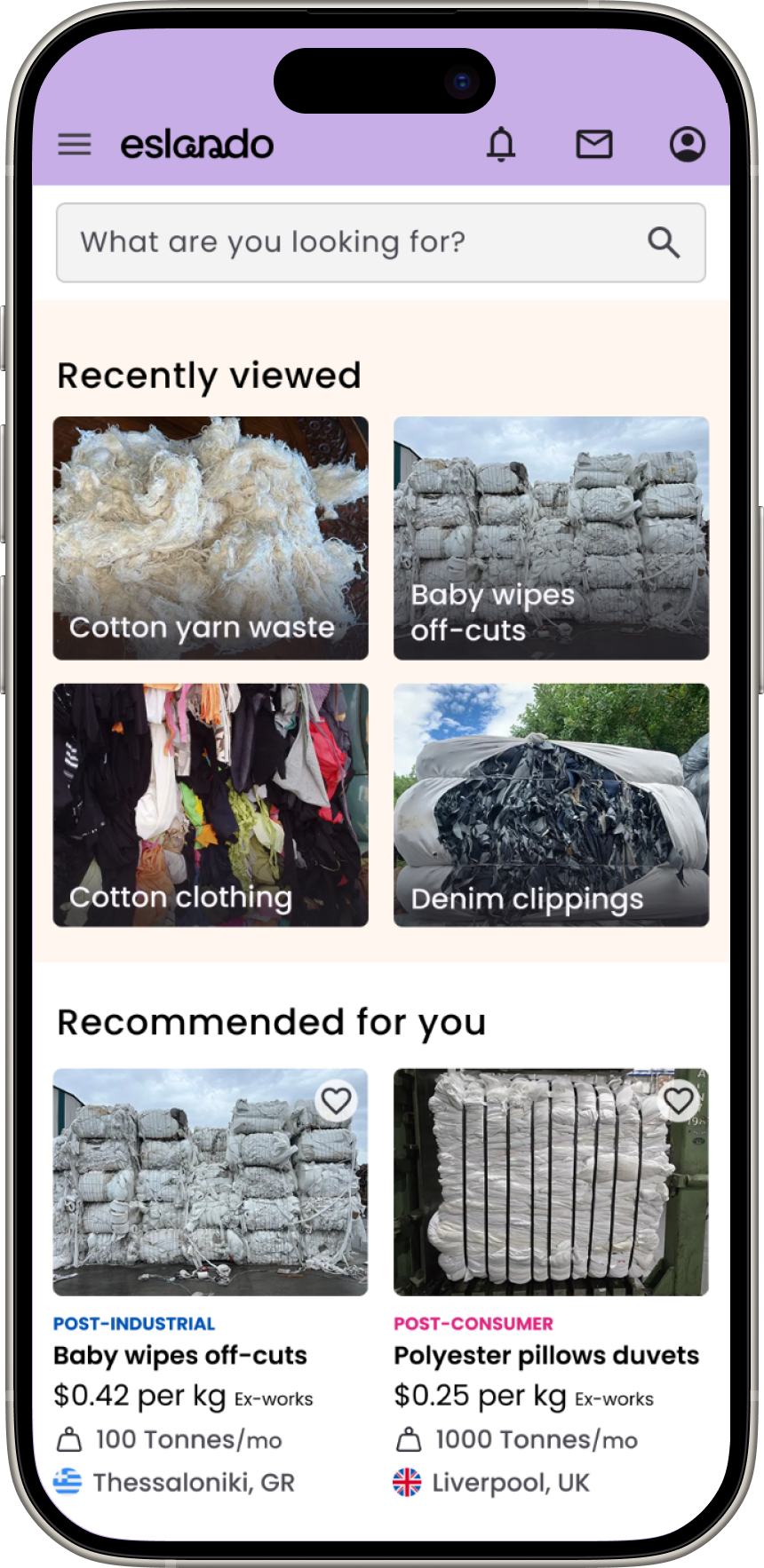
New homepage and personalisation
Look and feel, new visual design, developing on Eslando’s branding; new online marketplace styleguide
Product listings and product detail pages; with tailored advanced filtering options to meet Eslando’s clients’ needs
Buying and selling experience through brand visibility for those businesses, options to bundle, message, and negotiate on stock.

Information architecture and site navigation explorations
We set out to understand:
Requirements of main site navigation— this would be starting from scratch. How similar would it be for buyers vs. sellers?
What should product categorisation and prioritisation look like?
Do users of the platform want to both buy and sell? - if so do they need to switch between buying and selling, or should the experience be more integrated
What product and industry terminology is used, and is it universally understandable? Is terminology understandable across geographies? (second language/ industry terminology)
How might different customers/ archetypes want to use the platform?
Development of visual style and homepage design
Working with Eslando’s brand logo, colours and typefaces, I worked closely with the client to develop the look and feel across the screens and features we were designing. The client wanted a fresh and contemporary look for the marketplace.
Advanced filtering of products
While the familiarity of the layout for product filtering was inspired by online retail, it was important to understand that recyclers will have certain machinery and processes, where they must be specific about what they can buy and use. Material composition and combinations, and colours would benefit from being very specifically set by the buyer. They are generally buying stock in very large quantities
To deliver on budget and in the short time frame for the whole platform, we ideated and took some decisions based on conversations with the knowledgeable founders and proposed advanced filtering that would work for this industry.